BLOGS - PODCASTS - REVIEWS - INTERVIEWS
ABOUT WORK, LIFE AND CULTURE

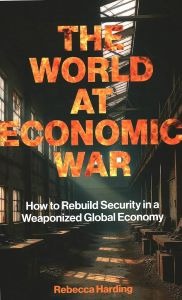
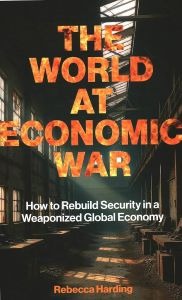
The World at Economic War
A book review of Rebecca Harding's The World at Economic War
Paul Carter
11/30/20254 min read
Everything seems to be weaponized these days. I might not be in the fight to save the world but I can read about the multiple threats to our peace and prosperity. War is more complicated than impossible sniper shots and macho shouts of “cover me” and “incoming”. There is economic war, making office laptop warriors as dangerous as drone controllers and bunker buster bombs.
When I saw Rebecca Harding on BBC News talking about trade and economics, I was impressed by her coherent and insightful analysis. I bought her book The World at Economic War. I was reading her words but hearing the America journalist Anne Applebaum’s voice of warning. “Hidden within trade data was evidence of the fact that governments were using trade strategically to coerce other nations and strengthen their geopolitical stance.”
Finding connections between Harding’s perspective on geoeconomics and trade weaponisation and Applebaum’s wake-up call warnings of democratic decline and authoritarian threats. The more I read the stronger the author’s voice and expertise came alive on the page. “My audience of bankers working in trade finance was more than a little shocked, as I pointed out that they were the unwitting foot soldiers in this conflict – taking instructions on tariffs, sanctions, export controls and financial restrictions on behalf of governments and dealing with them through their compliance departments.”
Finding meaning in the book
The undermining of institutions as internal sabotage of our resilience and ability to defend ourselves is a topical theme in business books. Harding says there are two reasons why economic war is a reality of our time. It fundamentally threatens the values of Western democracies and our capacity to fund security and deterrence. The fight over the economic levers of power of oil and gas has expanded to include economies, businesses, money, data and technologies.
As an HR and communications professional and aspiring author on the first chapter of my book ‘Why Work Matters’ I find this book inspirational. I need to know about international trade, the disruption to supply chains and the unbearable pressure on the institutions and rules that support the democratic West. The economic and social infrastructures that bind us together.
The book defines economic war and statecraft, urging institutions to adapt, identify and anticipate threats to combat it. I want to know more about complex global economic interconnectedness. “This book is deliberately provocative. I aim to describe how economics and trade have gone beyond being ‘weaponised’ to become both the means and ends of war.” It has provoked me. Just because I work in HR, it doesn’t mean I don’t know how the world works. Reading this book increases my employability and transferable skills.
Companies taking over the world
I agree the disintegration of the international rules-based order is our challenge with the United Kingdom being described as a middle power along with Europe. What do we do when we are busy living our lives and counting our pennies? After watching the TV series Alien:Earth where five companies rule the world, I wonder if this premise and the global fixation on flags and national identities are subtle motivations in the economic war.
If America is widely perceived as both a “global insurance company” (providing security guarantees to allies) and a “war machine” (due to its vast military presence and interventions), what does the UK stand for? We must understand what we are fighting against and play to our strengths to defend and attack without causing total war.
This book suggests globalisation is not dead with cross-border dependencies for all multinational corporations. “In the West, the core responsibility of corporations is to their shareholders, not the state. There is no link between fiduciary duty and the security of the state. This means putting the economy onto a kinetic war footing is fraught with difficulties because of the vulnerabilities and freedom of market-based capitalism.
Transformation
Access to data is like gaining yards in the killing fields of World War One without the tragic loss of life…for now. This book is a call to action for business and governments, not a call to arms. “The pace and impact of this global economic transformation are unprecedented. The control that our adversaries potentially have over the direction of travel through payments systems, digital trade finance and international markets renders free market capitalism ineffective against adversaries that have adapted to the system within.”
“Globalisation has produced unfair outcomes. People feel they have lost control over their own destinies. This has fuelled politics; it has created enemies where once there were trade partners.”
Where there is a deficit in the economy, government is blamed.
“Free movement of capital, people, goods, services and technologies across borders would work in the interests of business, but it also disempowered governments and politics.”
Conclusion
The book has documentary‑style recaps to help the reader understand the facts and themes running through the chapters. There is reference to Bretton Woods, cyber attacks, the realpolitik of national security, semiconductors, BRICS and Swift, the interbank cooperative dollar-denominated messaging system. How sanctions against Russia and other bad actors can be bypassed. Trade, tariffs, resources and how strains on supply chains and investments can put businesses and financial institutions on a war footing.
“Our future security will rest on an understanding that defence and national security rest on economic security. The question is: how should the economic war be fought to ensure security and resilience?”
Deterrence is all about credibility, whether fighting a war economically or militarily. We, us and them. Who is on our side or is it not that simple? Is this the grey area I keep reading about?
I would like to be involved in economic wargames like those described in the book, understanding they are not games, they are training for war. I am fascinated by geopolitics and geoeconomics although I will give the strategically important Arctic Circle a miss as I dislike the cold.
The first recommendation for economic security is integrating economic warfare thinking into the structure of government. I recommend you read this book to find out more about the world we live and work in and one day might have to defend.
Inspiration
What we talk about when we are working and living
© 2025. All rights reserved.