BLOGS - PODCASTS - REVIEWS - INTERVIEWS
ABOUT WORK, LIFE AND CULTURE

Sexual Harassment In Office Hours
How reading Lucy Kellaway's In Office Hours made me think about the dynamics and impact of sexual harassment and affairs at work. Is it anti-male to say the same behaviour is judged differently depending on power, age, and gendered expectations?
Paul Carter
4/25/20265 min read
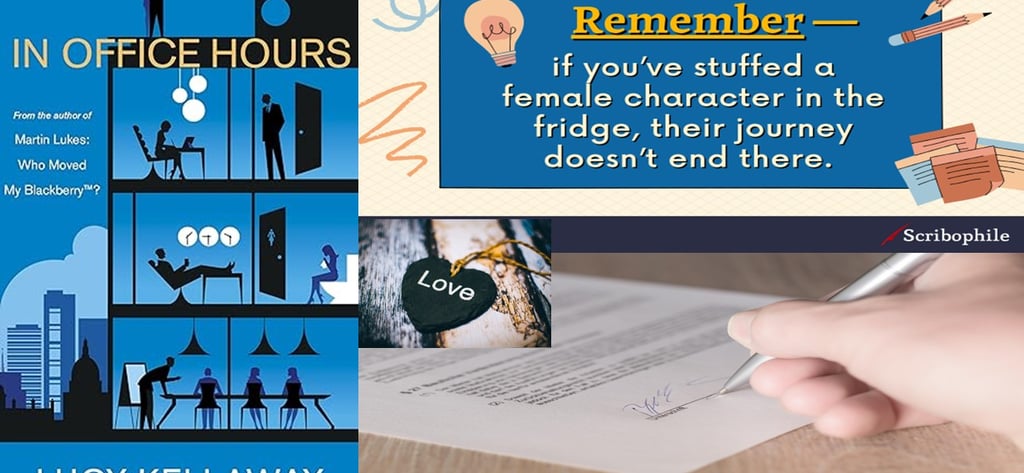
I have been reading In Office Hours by Lucy Kellaway to continue my series on preventing sexual harassment at work, wanting to learn more about love contracts and the conflicts of interest caused by executive romances.
This 2010 story is described as smart, funny, moving and agonizing, holding up a mirror to modern corporate life. Stella Bradberry is a highflying married mother of two and Bella Chambers is a smart single mother working as an assistant many rungs below in a global oil company. Both women embark on pole-axing, heart-wrenching affairs with men they wouldn't have looked twice at outside the office.
Stella is cheating with a much younger man whom she promotes and manages. Bella falls for her married boss who sees her potential. It is written through the female lens with a male filter on, portraying the women as sexually empowered adults who do not let policies, gossip and the risk of being caught stop them. There are power dynamics, gendered expectations and how workplaces judge women differently depending on seniority.
Kellaway uses Stella to critique corporate hypocrisy and gendered expectations of senior women. Bella’s storyline critiques male managerial irresponsibility and workplace vulnerability. Maybe they think they can get away with it but that’s not how stories or life work.
HR Intervention
Stella is riddled with angst and regret and knows she should end the affair but doesn’t want to. She is now a board member but with status comes expectations and the rules on office romances apply to everyone, right? The HR intervention does not come until page 245.
HR Director: Is this a good time? This is a little sensitive.
Stella: Fine.
HR Director: In a nutshell, I’ve received a complaint from a member of your department about your - your behaviour.
Stella said nothing, and he continued.
HR Director: Obviously we take our whistleblower rules seriously, so I cannot reveal the identity of the person who has raised the matter. However, I do happen to think that the complaint is a little - how shall I put it - far‑fetched. But, as HR director, I need to ensure that we go through the motions to make sure we are ticking all the boxes. Basically, the issue concerns yourself and your executive assistant, Rhys Williams. One member of staff has alleged favouritism, and has even stated - forgive me, Stella, this is not easy - that there might be an unprofessional relationship between the two of you of a sexual nature, and that this is clouding your judgement.
Stella felt as if she were removing herself from here and going somewhere else where this was not happening. She got away with it that time, but the audit trail, people’s observations, and romantic moments in Davos are caught on camera. The News of the World is going to expose the scandalous secrets and hypocrisy of the businesswoman of the year. Her affair is treated as a leadership failure that poses reputational risk for the company.
In a boardroom meeting, she is told it isn’t the fact that you had an inappropriate relationship with the young man, or that you promoted him. It isn’t even the fact that you got him into the room at Davos or all the stuff you ordered on room service. It isn’t the CCTV footage of the pair of you on the roof which is against our health and safety regulations. It’s the fact that you lied about it.
Stella says that she lied to protect the company and her family. She expresses her shame and dismay but does not apologise for falling in love with Rhys, despite the consequences it rained down on her life. She happily accepts the instruction to resign with immediate effect.
As for Bella, her consequences are personal, not institutional. Her junior status protects her - not because the organisation is kind, but because she is seen as vulnerable rather than culpable. While she is not formally disciplined, she leaves her job for an uncertain future. ‘If you were senior, the company paid for a party; if you were not, you paid for your own drinks.’
Neither affair turns into a relationship. Everyone is okay in the end even if they still long for those magic moments that caused such damage. It is a non-blame book with the sharing of accountability, responsibility and consequences dependent on status, not just gender.
No Fridging Allowed
In fiction, fridging is where a female character’s pain exists mainly to motivate a male protagonist. The term comes from Gail Simone’s “Women in Refrigerators” list and describes situations where women are killed, assaulted, humiliated or otherwise harmed to fuel a man’s emotional journey or plot, making it about the man’s quest for vengeance rather than the harmed woman’s journey.
A key feature of fridging is the woman’s inner life is not explored in the story. What I like about In Office Hours is Bella and Stella have fully developed lives. Their emotional and professional suffering is the centre of the narrative, not a device for the men’s self-discovery or mission to rewrite the rules of the workplace. They are “learning lessons” together: women pay the price, men move on. Sometimes it is the other way round.
Men should be allies for women at work and women can do the same to tackle the different forms of sexual harassment, while never forgetting that according to the Crime Survey for England and Wales, 8% of women and 3% of men experienced sexual harassment in the previous 12 months with 26% saying it happened at work.
'An institution is the lengthened shadow of one man' is a famous quote from Ralph Waldo Emerson’s essay Self‑Reliance. Its core meaning is institutions don’t arise from committees - they arise from people. The culture, rules, and identity of an institution are extensions of its founder’s mind. What would happen with preventing sexual harassment at work if more women were in the boardroom? I expect there are plenty of two-sided essays on that question.
It’s not the sex, it’s the lying
This Financial Times article from 2023 reported that many employers now have much stricter rules on everything from sexual relationships to teasing and bullying, often extending to incidents outside the workplace. That shift recognises the fact that poorly handled workplace relationships, whether sexual or not, can create a culture of favouritism that silences people and saps productivity.
Chief executives losing their jobs not because of sex but because of lies. High-profile CEO dismissals due to undisclosed, dishonest, or inappropriate relationships are rising, often involving “love contracts” or breaches of company policies regarding workplace romance. These contracts, more common in the US, are formal agreements where employees confirm that a relationship is consensual, reducing legal risks to the company if the relationship sours.
If you breach your love contract or get caught lying, it’s far worse than getting tangled in the bed sheets or trying to free your trapped arm from under your lover. Whether you butt dial your boss while making love or get caught by kiss cam at a concert, secrets have a way of slipping out, especially if you think you can get away with it.
What happens in the boardroom might stay on the executive floor while romantic relationships and sexual harassment among rank and file can be the same but different. When do our personal lives become an employer problem? It depends what you signed when you fell in love and what your feelings make you do to one another.
Inspiration
What we talk about when we are working and living
© 2025. All rights reserved.