BLOGS - PODCASTS - REVIEWS - INTERVIEWS
ABOUT WORK, LIFE AND CULTURE

Preventing Sexual Harassment Updates
Do you know enough about your employer's duty to prevent sexual harassment?
Paul Carter
3/29/20264 min read

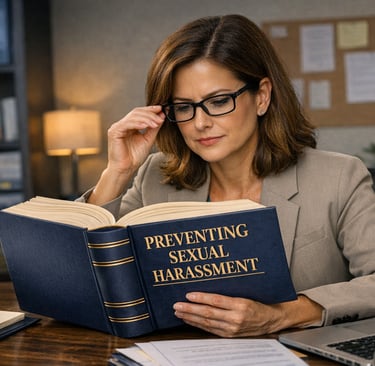
It’s an all-staff call, another two minutes until your slot on what taking all reasonable steps to prevent sexual harassment at work means in practice. Fifteen minutes including Q&A explaining how and why you are making the jump from reasonable steps to every single step to escalate your commitment to protect someone’s dignity and prevent their exposure to intimidating, hostile, degrading, humiliating or offensive environments.
What people want to hear versus what you are allowed to say. If only you could talk about case X, Y or Z, people would listen to every word you say. Wanting to know about the sleazebags in hiding, the perceived injustices against the innocent, banter that has been misinterpreted and who was fired.
Tempting but you cannot breach confidentiality or you will be facing disciplinary action. Be better than the allegations under investigation to hold the moral high ground. Remember not to jump to any conclusions. A good investigation and robust decision making can deliver organisational justice.
If cases are in the news, it can feel uncomfortably meta to look at went wrong. If there are lessons to be learned that is for private discussions and for organisational impact.
The Worker Protection (Amendment of Equality Act 2010) Act 2023 rolls off the tongue and your slides look distinctly similar to the October 2024 version. What did we do about tackling sexual harassment before October 2024? Did we only respond after incidents allegedly happened? Surely not. We were not walking around blindfolded with our fingers in our ears and lips zipped.
Now we have to act even more proactively to prevent sexual harassment. Risk assessments, education, bystander training and creating a culture that empowers intervention and appropriate action. All these thoughts rushing through your head and then the camera is on you. Everyone is looking at you. Your AI search on preventing sexual harassment in the UK is somewhere on your laptop. What are you going to say?
All Reasonable Steps
When the camera is on you, you may have speaking notes on employer responsibilities. You may get tongue tied as you jump between the Employment Rights Act 2025, Worker Protection Act and the Equality Act to explain the legal framework to protect people from harassment in the course of their employment.
Bullet point knowledge may suffice for all-staff calls where the aim is to reinforce key messages. The challenge for HR is to complement this with detailed knowledge to understand the legal responsibilities and how to apply that to their organisations. This fact sheet by the lawyer Daniel Barnett from June 2025 breaks employer responsibilities into sections and explains the legalese for the below:
Whistleblowing protections: From April 2026, reporting sexual harassment will be explicitly covered under whistleblowing legislation
All reasonable steps’ duty: By October 2026, the legal duty will extend from taking ‘reasonable steps’ to ‘all reasonable steps’, increasing what is expected of employers
Non-disclosure agreements: Employees who are subject to harassment or discrimination will no longer be silenced by NDAs, ensuring victims can speak out and make protected disclosures.
Barnett says: “The word ‘all’ is key. It raises the bar. It implies a more stringent obligation. It’s not enough to do something; you must do everything that is reasonably in your power to stop harassment before it happens.”
I was listening to the Personnel Today podcast which said ‘reasonable’ is the word employers should focus on, claiming ‘all’ does not add much to legal protections. The courts will want to know if employers did everything that could reasonably be expected.
The legal firm Shoosmiths says: “Regulations setting out what counts as “reasonable steps” will be published in 2027, following a public consultation. This means employers must comply with the higher duty before receiving full guidance, creating a challenging and unpredictable environment. The message is clear: employers cannot wait and should act now, prepare now and refine later.”
What about whistleblowing?
Whistleblowing sounds important, dramatic, something a Guardian reporter might uncover before they are neutralised in Waterloo Station. Hang on that’s the Bourne Ultimatum. Apart from whistleblowing requiring a public interest element, what do we know about it?
Shoosmiths confirms “that any report of sexual harassment will automatically count as a protected disclosure in relation to a potential whistleblowing claim. This means workers will be protected from detriment, employees will be protected from unfair dismissal and disclosures about sexual harassment will no longer need to be framed as a health & safety, legal breach, or criminal offence issue. The aim is to encourage earlier and safer reporting.”
That might be all you need for corporate clarity. To sound clever you can talk about the public interest Chesteron test, which considers the number of people affected, the nature and impact of the wrongdoing and who the wrongdoer is.
What about third party harassment?
The Daniel Barnett fact sheet states: “The [Act] reinstates (and broadens) a law that was previously in place years ago: making employers liable if a third party (customer, client, contractor, etc.) harasses their staff if the employer failed to take all reasonable steps to prevent it. Right now, if, say, a customer harasses your employee, the employee can’t sue you for harassment under Equality Act.”
I recommend listening to the Personnel Today podcast on this update which explores the difficulties in determining if the alleged act of sexual harassment happened in the course of employment and how the courts often make a moral decision on whether it should hold an employer responsible for it.
Barnett makes this point: “you’re not automatically liable for a customer’s actions; you’re liable if you didn’t do what was reasonable to protect your staff. So no, you can’t mind-control a customer, but you can set standards and react appropriately.”
Next Steps
You cannot finish a presentation without talking about next steps, even if the presentation was on taking all reasonable steps. Top tips include review and refresh your policies, risk assessments, effective training, setting boundaries with external parties and strengthen culture and reporting routes. You need data and feedback to support monitoring and evaluation. Don’t forget about preparing for AI Grok style creation of sexual images that would constitute sexual harassment.
Inspiration
What we talk about when we are working and living
© 2025. All rights reserved.