BLOGS - PODCASTS - REVIEWS - INTERVIEWS
ABOUT WORK, LIFE AND CULTURE

Book Review - Rebooting Tech Culture
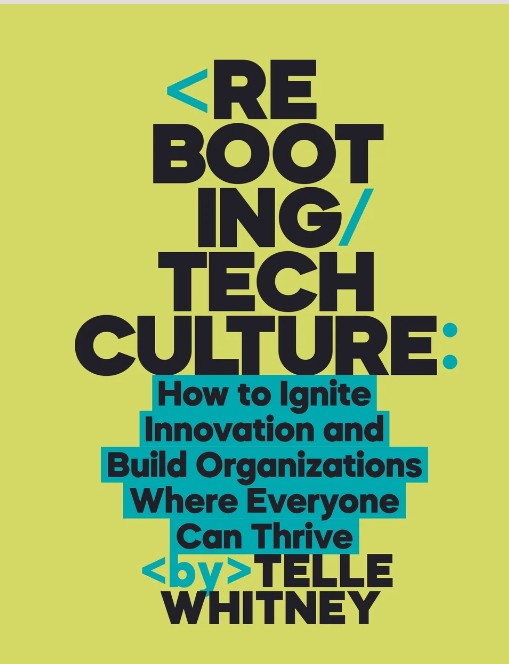
My book review of Rebooting Tech Culture - How to ignite innovation and build organisations where everyone can thrive by Telle Whitney
4/1/20264 min read
When I talk about diversity and inclusion I always want to stick up for the other side to give everyone a voice. Yes, white people can be racist, but anyone can be racist. Yes, there are sexist, nasty men, but some women can display similar behaviours. Minority network groups are important, but don’t label people as we all want the same things. I want to do the right thing, but am I saying the right thing? Action speaks louder than words, I guess.
I read Rebooting Tech Culture by Telle Whitney to make informed comments and decisions to build organisations where everyone can thrive. A recognised expert and advocate for diversity and women in technology in North America. I am British and have never worked in America or in tech. However, this book is relatable to many industries and organisations with killer quotes to drop into conversations and slide packs.
Whenever I hear the term white privilege, I want to shout: ‘Don’t you know what I’ve been through? I’m not privileged.’ That is missing the point, maybe another form of othering, not seeing the bigger picture. In the Communities for All section of the book it talks about how white men familiar in their environment often assume their experience is universal. “As a result, many white men don’t realise the extent to which groups such as women and people of colour might not feel that same belonging.”
This may feel familiar to organisations that debate the pros and cons of allowing inclusion events during working hours: “Most managers aren’t attuned to how much harder it is for members of underrepresented groups to find a community. These managers often shut down or don’t support them when they request to attend conferences, local meetup events, or internal networking opportunities that might help them feel a sense of belonging but take place during work hours.” - Tell me, readers, what happens in your organisations?
I agree that “employees hunger to connect with others who understand them and share their experiences at work”. Work should be a place you make friends even if the friendship ends when you leave the company. As a creative writer this book triggered visions of films in my mind. Just imagine being the first person who launched an LGBTQ+ lunch network and turned up every Thursday until more people joined, increasing their voice and belonging and making them a powerful organisational ally.
It is a book about organisational culture and experiences, not an exposé of discrimination, harassment and isms in the tech industry. The author Telle Whitney draws on more than 50 interviews with tech executives and a survey of 1,000 people in tech to balance her career insights with other people’s challenges and successes. Being connected makes it easier to write an interesting and relevant book as opposed to books that feel based on speculation and second-hand research. However, Telle still had to write it to repay the people who invested in her to tell their stories.
“Getting my hands slapped for taking risks has made me pull back, due to financial obligations,” says a white woman who worked as a data scientist. The book has interesting reflections on how risk influences the assignment of projects in tech companies, exploring how favouritism, familiarity and talent pipelines can keep underrepresented groups away from launch pads for career development.
One tech boss makes a good point that he assigns high-risk, high-reward assignments equitably among his team members, but it takes five years of prep work to develop their skills and reputation to be ready for these stretch opportunities. Sometimes the sidelining of women is because the managers do not want to overburden them with work when they do the heavy lifting for family commitments. Putting the spotlight on how societal and cultural traditions and barriers can collide with organisational norms to stunt progress.
“Many people have chosen to tell their stories at great cost to their personal and professional lives. And if you ask them why they decide to do it, many will tell you it’s because they hope their experience will give courage to others going through similar struggles to speak up.” The book has enough positive anecdotes to make me believe that tech companies are not full of unisex Jerry Maguire “Who’s coming with me?” moments where your epiphany falls on deaf ears and the office chews you up and spits you out.
Executive presence, leadership presence, cultures of confidence, sponsorship, mentors. Although some of the ideas in the book are already populating corporate diversity strategies, when they are put into context, it is an a-ha moment. “If there is no one to look up to, if else like me has climbed the ladder, what are the chances that I will? If you are a Black computer science student, hearing from a Black senior executive can be mind-shifting. If you are a lesbian engineer, hearing from a widely successful leader who was once in your shoes reminds you that you are not alone.”
This book brought back a memory of crossing the road with a former manager in London, who said: “We value you the way you are. You should just be yourself.”
I thanked her but wondered what she meant; now I understand. You do not have to be in a minority group to be different. All you have to be is the best version of yourself and allow other people to see it.
Inspiration
What we talk about when we are working and living
© 2025. All rights reserved.